

The accelerating climate crisis underscores the urgent need for businesses to take responsibility for their carbon emissions. Rising global temperatures, driven primarily by greenhouse gases like carbon dioxide (CO₂), methane (CH₄), and nitrous oxide (N₂O), are causing devastating consequences, extreme weather events, rising sea levels, ecosystem collapse, and threats to food and water security. The scientific consensus is clear: immediate and drastic emission reductions are required to limit global warming to 1.5°C, the threshold beyond which climate impacts become catastrophic.
For businesses, failing to manage carbon emissions is no longer just an environmental concern; it is a direct threat to long-term viability. Governments worldwide are tightening regulations, introducing carbon pricing mechanisms, and mandating transparent emissions reporting. Companies that ignore these shifts risk financial penalties, legal consequences, and exclusion from supply chains that are increasingly prioritizing sustainability. Meanwhile, investors and consumers are rapidly shifting their preferences, favoring businesses that demonstrate credible climate action while shunning those lagging behind.
Beyond compliance and reputation, proactive carbon management unlocks tangible economic benefits. Energy efficiency measures, renewable energy adoption, and circular business models reduce operational costs while future-proofing against rising carbon prices. Early movers in low-carbon innovation gain competitive advantages, securing market share in the growing green economy. Conversely, businesses reliant on carbon-intensive practices face escalating risks, stranded assets, disrupted supply chains, and declining investor confidence.
The planetary stakes are equally critical. Unchecked emissions accelerate biodiversity loss, worsen air pollution, and destabilize vital ecosystems. By reducing their carbon footprint, businesses contribute to global efforts to preserve natural resources, protect vulnerable communities, and ensure a livable climate for future generations.
In this decisive decade, carbon management is not just a sustainability initiative; it is a strategic necessity. Businesses that embrace this challenge will lead the transition to a resilient, low-carbon economy, while those that delay risk obsolescence. The choice is clear: act now to secure both a thriving business and a sustainable future.
What are Energy Efficiency Measures?
One of the fastest and most cost-effective ways for companies to cut carbon emissions is by improving how energy is used on-site. Simple upgrades, such as replacing incandescent bulbs with LED lighting, installing high-efficiency motors, and sealing air leaks in buildings, can reduce electricity consumption by 10-30% with payback periods often under two years. More advanced steps include retrofitting heating, ventilation, and air-conditioning (HVAC) systems with variable-frequency drives, implementing building automation controls, and conducting regular energy audits to identify hidden waste and opportunities for optimization.
Manufacturing and production facilities can also benefit from process improvements like heat recovery, where waste heat from furnaces or compressors is captured and reused, cutting fuel use by up to 20%. In offices and commercial spaces, behavioral measures, such as setting thermostats to energy-saving temperatures, enabling power-management features on computers, and encouraging staff to switch off unused equipment, further drive down demand with minimal capital investment. By combining technology upgrades with staff engagement and ongoing monitoring, businesses can lock in lasting efficiency gains that immediately impact both emissions and the bottom line.
What is Renewable Energy Adoption?
Transitioning to renewable power is a critical pillar of any carbon-reduction strategy. Companies can install on-site solar photovoltaic (PV) panels or small wind turbines to generate clean electricity and offset grid-based emissions. For organizations with limited rooftop or land area, purchasing renewable energy through power purchase agreements (PPAs) or community solar programs provides access to green power without upfront capital costs. Similarly, many utilities now offer green tariff options that guarantee electricity comes from certified renewable sources.
To maximize impact, renewable adoption can be paired with energy storage systems, such as lithium-ion battery banks, that store excess generation for use during peak demand or grid outages. This combination not only stabilizes the power supply but also helps manage demand charges and further reduces reliance on fossil-fuel peaker plants. By integrating renewable energy into their energy mix, businesses signal to investors and customers their commitment to sustainability, while locking in predictable energy costs and shielding operations from volatile fuel prices.
What Are Circular Business Models?
A circular business model is an economic approach designed to eliminate waste, maximize resource efficiency, and keep products and materials in use for as long as possible. Unlike the traditional linear economy (take-make-waste), circular models prioritize reuse, repair, remanufacturing, and recycling to create a closed-loop system that minimizes environmental impact while unlocking new revenue streams.
Imagine a smartphone designed to last longer, with parts that can be easily fixed or upgraded. When it finally wears out, its materials are recycled into new devices instead of ending up in a landfill. Or think of a clothing company that collects old garments, breaks them down into fibers, and spins them into new fabric. These are examples of circular thinking in action.
By prioritizing reuse and recycling, businesses reduce their environmental impact, save money on raw materials, and even create new income streams, like selling refurbished products or offering repair services. It’s a win for the planet and a smart strategy for companies looking to thrive in a world where resources are finite and customers increasingly value sustainability.
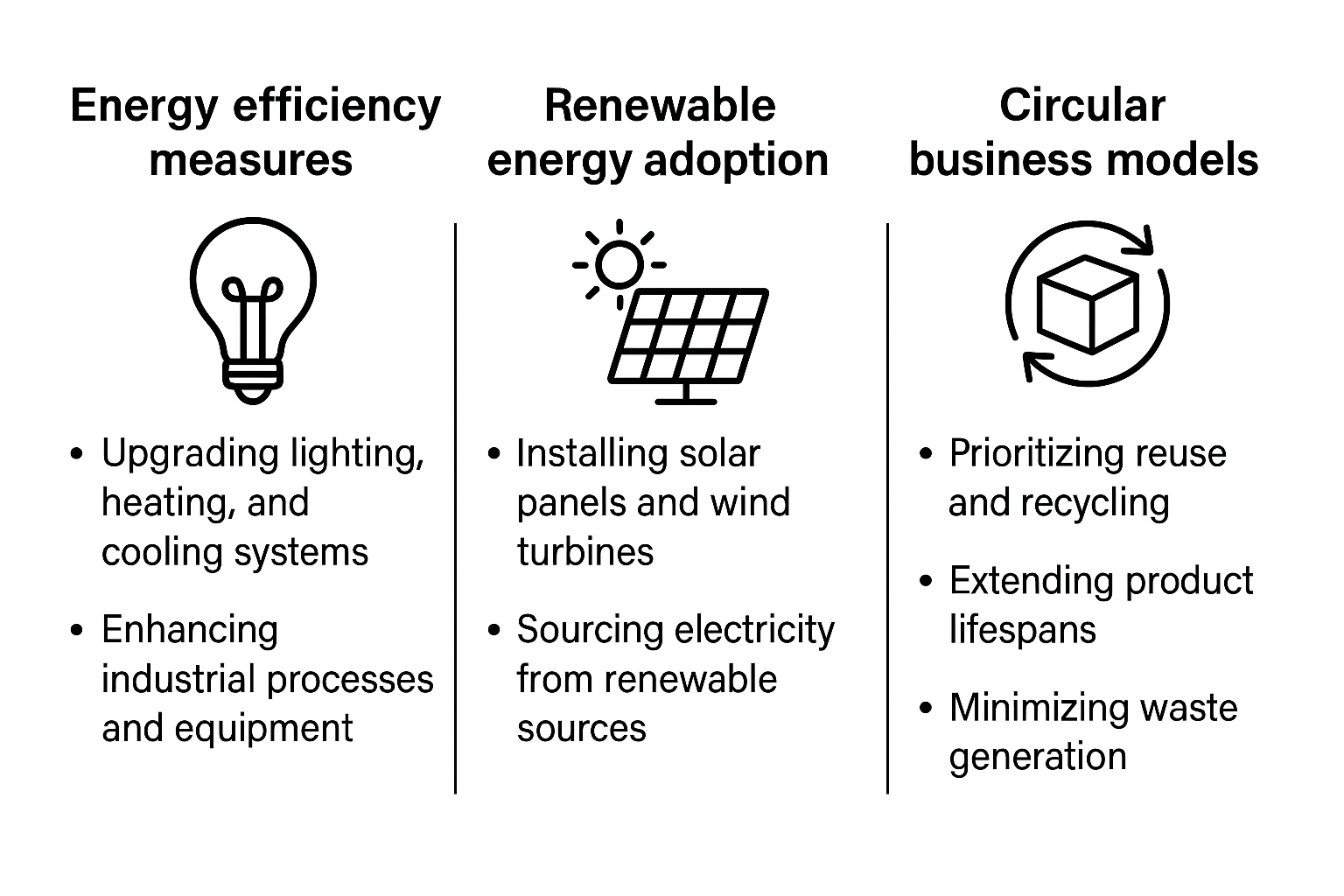
Figure 1. Three core sustainability strategies, each illustrated with practical examples to guide low-carbon action.
Conclusion
By integrating energy efficiency measures, renewable energy adoption, and circular business models, businesses can achieve significant carbon reductions while cutting operational costs and enhancing resilience. Implementing these strategies paves the way for sustainable growth, competitive advantage, and a lasting positive impact on both the bottom line and the planet.